Looking into the future of factories
At Cadence we are all absolutely fascinated by factories, and as industrial & technical communicators, we often get a front row seat to view the latest innovations that are pushing the boundaries and shaping the future of factory operations. Winding the clock back 10 years, a blog looking to the future, such as this one would likely have included the implementation of artificial intelligence, virtual or augmented reality, advanced robotics and cobots, all elements that are now common fixtures in factories. So, let’s take this opportunity to look forward at the exciting trends that will likely become common place in the next 10 years.
- Robot gyms – training the machines of tomorrow
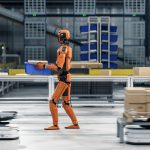
Following a recent conversation with François Disch, Digital Transformation Delivery Lead, Schneider Electric, we were shown the challenges associated with creating ‘robot gyms’ – these are robotics and development labs – a specialised environment where robots are designed, tested, and trained to perform complex tasks, enabling advancements in automation, artificial intelligence, and machine learning. The idea is to reproduce physical constraints in a virtual world to train advanced deep learning computer vision models where AI-powered robots can simulate tasks and refine their performance before being installed. AI algorithms give robots the ability to “learn” from repeated actions, adapting their movements to avoid errors and work faster, but this has proven more challenging than expected.There is an enormous potential with robot gyms, as shown in the OpenAI Gym that is used to train AI through practice and reward, but currently still requires not only substantial computing power but onsite dedicated data scientists to reach the desired result. If we continue to follow Moore’s Law, it won’t be long until robots are delivered to factories with a full understanding of their process, awareness of surroundings, and nuances of the facility, representing a major efficiency benefit.
- Fully remote operations – Virtual Reality Factories
Remote operations are not a new concept for factories, and neither is virtual reality/augmented reality, but how far away are we from a ‘virtual remote operator’? This is someone who doesn’t set foot in the factory but is instead directly controlling robots through virtual reality in a separate location. While there are still challenges associated with this concept, it could work to mitigate the skills gap by ensuring experienced employees can leverage their knowledge even in overseas operations. On the other end of that skills gap scale, it may work to encourage the next-generation workforce who already has experience with VR/AR technologies. There are multiple documented cases of doctors performing surgery through advanced technologies, and this concept would work in much the same way but with the added realism of a virtual environment. We are already seeing digital twins being accessed from virtual reality in the design process of new machines, and this could advance into day-to-day functions. The biggest benefit we can see from this approach is that humans could be removed from any hazardous situations while keeping their vital knowledge within the team. - Lights out factories – how close are we?
The potential of a lights out factory has been discussed since the 1980s and the concept has advanced as new technology became available. The idea is that machinery could work autonomously without human intervention, the company, FANUC, is credited as an early adopter by creating a factory that could operate without workers for extended periods.While new technologies, even those mentioned, like AI and robotics, seem to be advancing towards this concept, the human operator will remain a permanent fixture in factories for many years. Even if said worker is operating remotely or interacting with assets digitally, there is currently no substitute for the skills and knowledge of an expert human operator. Reaching a completely autonomous factory remains challenging and will likely always require human oversight to some degree or another.
If you are keen to understand what the factory of the future may look like, our First Friday Industrial Editors’ Briefings events offer the perfect opportunity to present or learn about the latest products, innovations, or services that are shaping the future of factories.