To Bee or not to Bee – there is no question
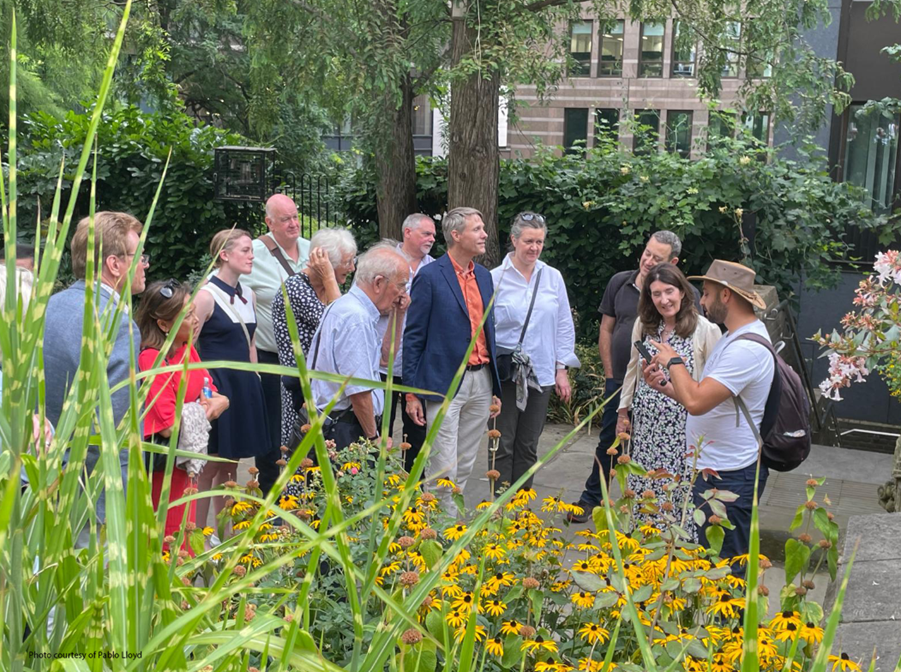
My colleague Elaine Cobb, recently undertook a guided walk on my behalf (I have just had an op on my foot so couldn’t waddle for an hour) of City of London gardens to hear more about how generally we are all up for protecting the Apis mellifera, but much less the Syritta pipiens. Before you think I’m going completely loopy, I am (of course 😉) talking about pollinating insects, in particular in The City of London, which has been Cadence’s base since we formed in 2001. Don’t buzz off just yet though. As I’ve mentioned previously, we are working towards our BCorp Certification as sustainability and kindness towards fellow inhabitants of our planet are the core tenets of Cadence and this walk was an eye opener (apparently!).
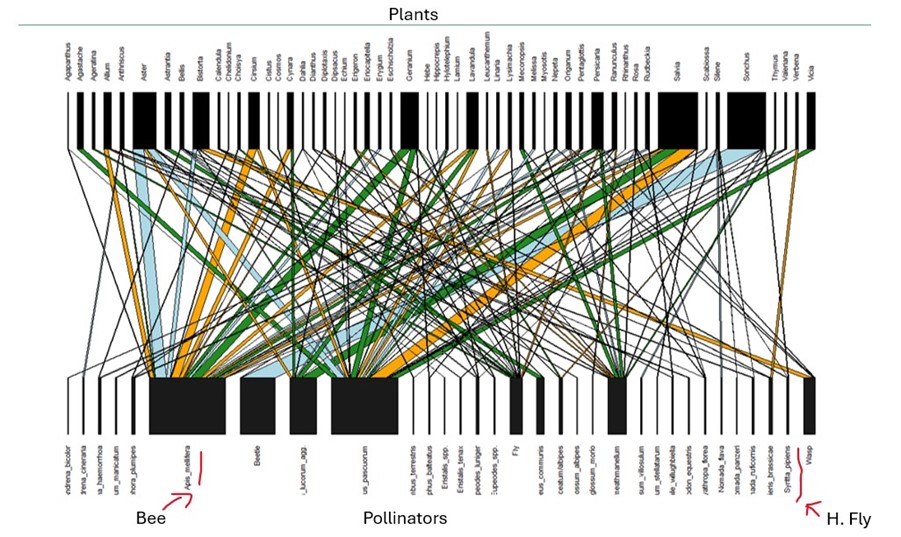
The fact that an astonishing one-in-three bites of food relies on pollinators has never really resonated with me, I have to admit that I thought the most important pollinator was the humble bee. Even to the point when Ryan, my husband, was seriously looking to install hives in our garden. This snack of information came from an online talk I organised with @John Burton from @Pollinating London Together on behalf of the Company of Entrepreneurs. Ok, there isn’t much farming within the City, but this is a great opportunity to demonstrate how easy it is to assume that the only pollinators are bees. This chart (which shows the results of a City of London wide survey) shows that honeybees collect pollen from just about every plant, whereas the hoverfly (for instance) visits very few!
So, with a population of honeybees in the City of London sitting around 57% compared to the national average at 7%, the City appears to have a problem! Essentially, the honeybees are taking more than their fair share of forage, pollen and nectar. Which is leaving more ‘picky’ insects with less food. So, while Pollinating London Together organisation works to educate around the need for diversity among pollinators, there is a need to encourage companies and residents with green spaces, no matter how small, to look at the diversity of their planting.
And why is this relevant? It becomes clear when you really look at the chart. The top axis of the chart lists common plants, while the bottom axis reflects the most common pollinators of those plants within the City of London. The spaghetti in the middle connects the species of pollinating insect to the pollinating source. You can see, by the size of the blocks on the bottom axis, which insects have the broadest taste and which are left with empty larders.
Pollinating London is actively working on several initiatives to balance the pollinator population and support biodiversity and they could do with some help, so if you want to find out more, then buzz over to https://www.pollinatinglondontogether.com/ . They are Promoting Diverse Planting: Encouraging the planting of a variety of native plants that attract a wide range of pollinators, not just honeybees. My ‘learns’ from Elaine’s walk and John’s presentation have seeped into my own garden at home. I am now planning my planting schemes with a variety of pollinator-friendly plants. It’s my take on making a personal impact on my own spaces and helping to increase the diversity within my own domain. We can all make an impact if we know how.